
What to Expect During Medical Device Usability Validation Testing
Usability validation testing is a formal, risk-based evaluation that confirms a medical device is safe for its intended users under realistic conditions. During this phase, you will observe representative users performing critical tasks while engineers track use errors and safety risks. The goal is not to prove the device is easy to use, but to ensure that any remaining risks are acceptable and mitigated. This process is a critical regulatory requirement for most Class II and III devices.
The Regulatory Framework Behind the Testing
Usability validation is not optional for most modern medical devices. The FDA requires manufacturers to integrate human factors engineering into the design process, particularly for devices where use errors could lead to serious injury or death. This requirement is rooted in the FDA's guidance on applying human factors and usability engineering to medical devices. The agency expects a systematic approach that begins with formative research and culminates in a summative validation study.
The core of this framework is the concept of use errors. A use error is a user action that deviates from the intended use of the device and could result in harm. During validation, you are not just watching for confusion; you are specifically looking for these safety-critical deviations. The FDA and the Agency for Healthcare Research and Quality have both emphasized that usability evaluation must be part of the design process, not an afterthought. This regulatory stance means that your testing protocol must be rigorous, documented, and reproducible. according to Usability Validation of
For teams working with system engineering services, this phase is where the theoretical risk analysis meets practical reality. The validation study serves as the final proof that the risk management file is complete and that the device is safe for its intended population.
Designing the Test Protocol and Scenarios
Before a single participant enters the room, the test protocol must be locked. This document defines the specific tasks users will perform, the environment in which they will perform them, and the criteria for success. A well-designed protocol focuses on high-risk tasks. These are the steps where a mistake could lead to patient harm, such as incorrect dosing, improper connection of components, or misinterpretation of a display.
Scenarios should be realistic but controlled. You are not testing in a live clinical setting during validation; you are testing in a simulated environment that mimics the real world. This might include a mock operating room, a simulated home environment, or a clinic setup. The key is to replicate the distractions, time pressures, and user characteristics of the actual use case. For example, if a device is used by nurses in a busy emergency room, the test should include background noise and time constraints.
At A65 Consulting, we often help clients define these scenarios by mapping out the user journey. We identify the critical decision points and design tasks that stress-test the interface and physical design. This ensures that the validation study answers the specific questions raised by the risk analysis, rather than just providing general feedback on ease of use.
Selecting the Right Participants
One of the most common mistakes in usability validation is recruiting the wrong users. The participants must represent the intended user population. If your device is designed for surgeons, you cannot test with medical students. If it is for home care, you cannot test with hospital staff. The sample size is also critical. While formative studies might use five to eight participants, summative validation typically requires a larger, statistically significant sample to ensure the results are reliable. according to Optimal Usability Test
The FDA guidance suggests that the sample size should be sufficient to detect a certain level of use error. This is often calculated based on the acceptable risk level. For high-risk devices, you may need dozens of participants to be confident that the error rate is below a specific threshold. Recruiting these participants can be challenging, especially for specialized clinical roles. It requires careful planning and often involves partnering with clinical sites or professional associations. according to Human Factors and
Participant selection is a key component of the medical device prototyping and testing lifecycle. Ensuring that the people in the test match the people who will use the product in the field is essential for the validity of the data. If the participants are not representative, the results cannot be used to support regulatory clearance.
Data Collection and Error Analysis
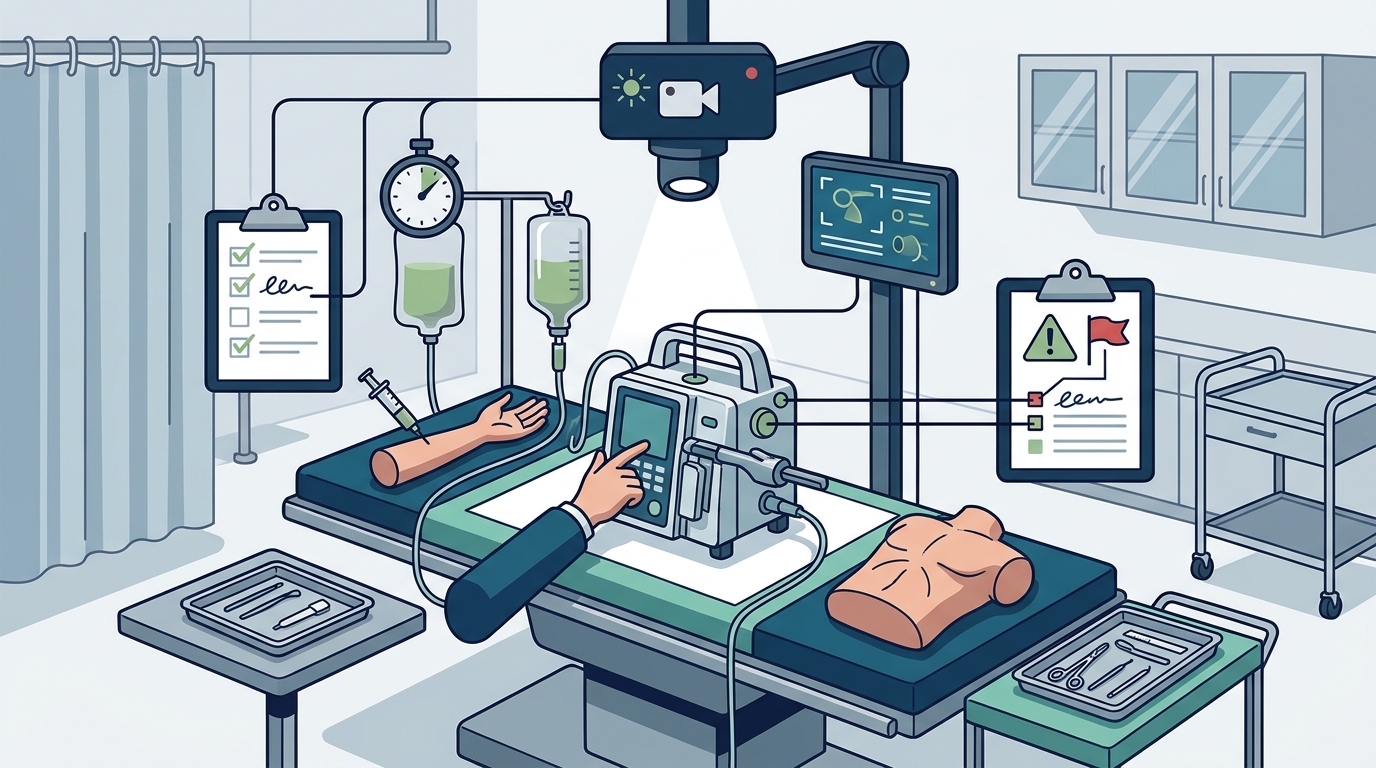
During the test sessions, data collection is meticulous. Trained observers record every action, hesitation, and error. This is often done through video recording, standardized checklists, and direct observation. The focus is on identifying use errors and near-misses. A near-miss is an action that would have led to harm if not for a last-second correction or a safety feature. These are just as important as actual errors because they reveal potential failure modes.
The data is then analyzed to determine the frequency and severity of errors. This analysis feeds directly into the risk management file. If the error rate is higher than expected, the design may need to be modified, and the validation process may need to be repeated. This iterative loop is a hallmark of human factors engineering. It is not a one-time event but a continuous process of refinement.
For teams managing complex devices, this phase often requires specialized expertise in design for manufacturing and quality. The insights gained from usability testing can influence not just the software interface but also the physical design, labeling, and packaging. A clear label can prevent a use error just as effectively as a software lockout.
Reporting and Regulatory Submission
The final output of usability validation is a comprehensive report. This document summarizes the test protocol, participant demographics, results, and conclusions. It must clearly state whether the device is safe for its intended use and whether any remaining risks are acceptable. This report is a critical part of the Design History File (DHF) and is submitted to the FDA as part of the 510(k) or PMA application.
The report must be transparent. If errors were observed, they must be documented and explained. The FDA reviewers will look for evidence that the team understood the errors and took appropriate actions. A report that hides or minimizes errors is a red flag. Transparency builds trust with regulators and demonstrates a commitment to patient safety.
Working with experienced partners can streamline this reporting process. At A65 Consulting, we help clients navigate the nuances of regulatory documentation. We ensure that the usability validation report aligns with the rest of the design control documentation, creating a cohesive and defensible submission package.
Key Takeaways
- Usability validation is a summative, risk-based test required by the FDA for most medical devices.
- The goal is to identify use errors that could lead to harm, not just to measure ease of use.
- Test scenarios must be realistic and replicate the actual clinical or home environment.
- Participants must accurately represent the intended user population to ensure valid results.
- Data collection focuses on errors and near-misses, which feed directly into the risk management file.
- The final report is a critical regulatory document that must be transparent and detailed.
- Usability validation is an iterative process that may require design changes and re-testing.
Frequently Asked Questions
How many participants are needed for usability validation?
The sample size depends on the risk level and the acceptable error rate. For high-risk devices, you may need 20 to 30 or more participants to achieve statistical confidence. The FDA guidance provides methods for calculating the required sample size based on the desired precision of the error rate estimate.
What is the difference between formative and summative usability testing?
Formative testing is iterative and used to improve the design. It is less rigorous and can be done with smaller samples. Summative testing, or validation, is a final, rigorous evaluation to confirm that the design is safe. It is required for regulatory submission and must follow a strict protocol.
Can usability validation be done remotely?
While some formative testing can be done remotely, summative validation typically requires in-person observation to capture non-verbal cues and environmental factors. Remote testing may be acceptable in some cases, but it must be justified and validated as equivalent to in-person testing.
What happens if the device fails usability validation?
If the error rate is too high, the design must be modified to mitigate the risks. The validation process is then repeated with the updated design. This is a normal part of the development cycle and does not necessarily indicate a failed project, but it does require additional time and resources.
How does usability validation relate to the Design History File?
Usability validation is a key component of the Design History File. All protocols, raw data, and reports must be archived in the DHF. This documentation is essential for demonstrating that the device was developed in accordance with design control requirements.
Who should conduct the usability validation study?
The study should be conducted by qualified human factors engineers or usability specialists. These individuals must be trained in the specific methodology and unbiased by their involvement in the design process. Many companies outsource this work to specialized consultants to ensure objectivity.